In the serene embrace of Veenendaal, a new chapter in architectural elegance is poised to unfold. The Lampegiet Theatre, a creation by the esteemed MVRDV in collaboration with Buro Happold, promises to be not just a building, but a landmark that captures the essence of cultural evolution. Approved by the Veenendaal City Council in January 2026, this visionary project is set to commence its physical journey in 2027, with a completion horizon of 2029.
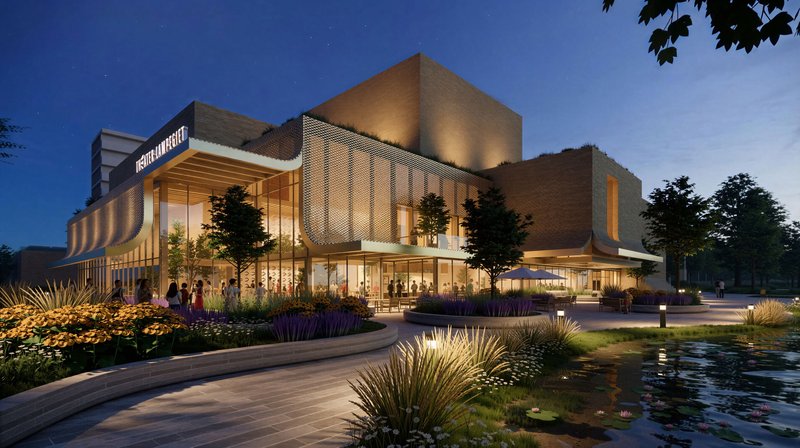
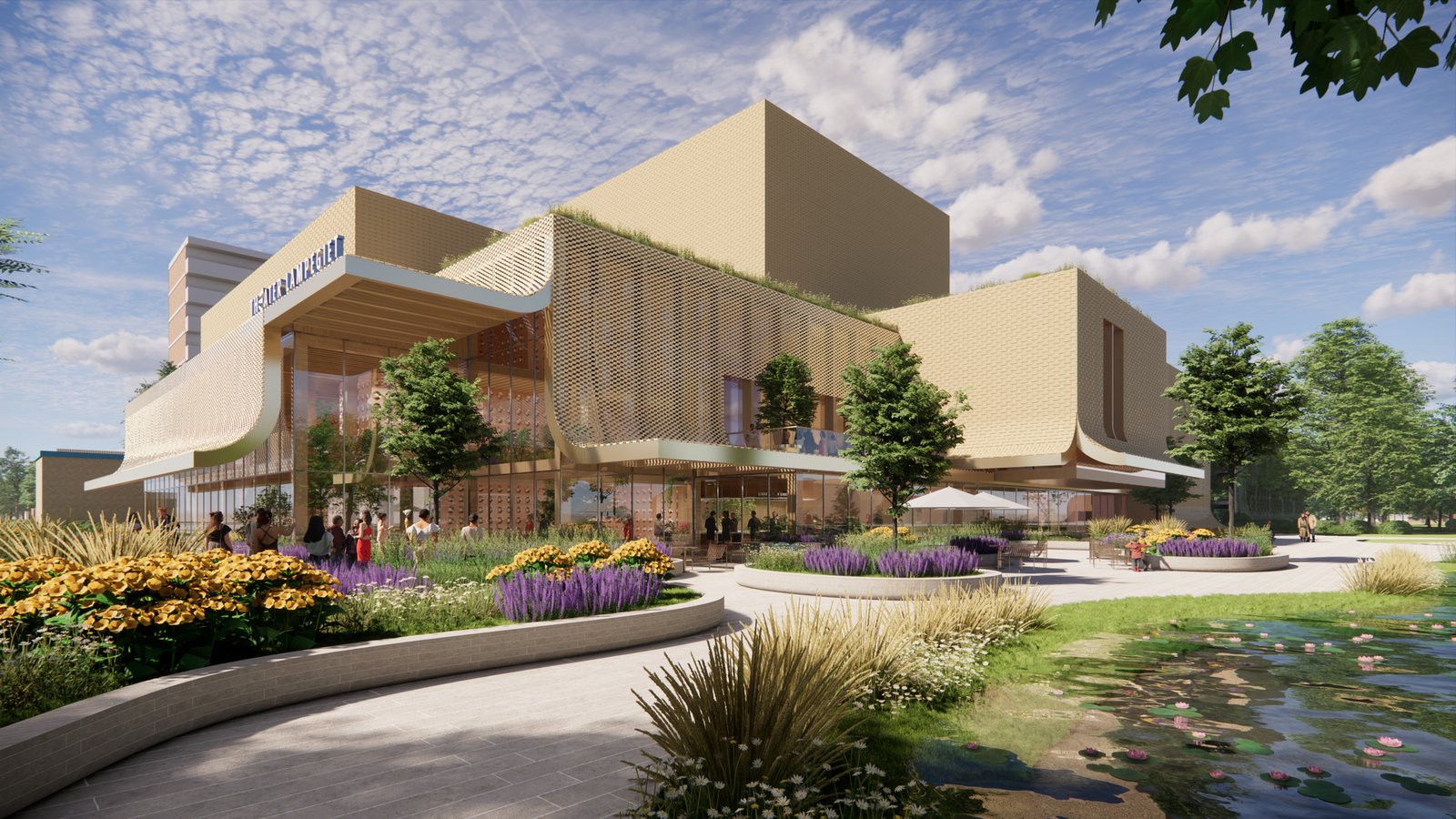
The theatre is imagined as a contemporary cultural venue, deeply rooted in the rich tapestry of the city's historical identity. Its design, a compact yet dynamic composition, is enveloped in a porous ceramic facade. This innovative choice transforms the theatre into an illuminated urban beacon, a nod to the city's beloved Lampegietersavond festival where children parade with lanterns, casting a gentle glow across the historic streets.
Replacing the original structure from 1988, which has grown weary with time, this new edifice addresses the demands of modern performance art while preserving the spirit of communal gathering. The municipality's foresight in envisioning a space that aligns with contemporary sustainability standards is commendable. It is a venue designed to embrace a myriad of functions, from pop music performances to intimate cinema screenings, thus promising to enliven the Duivenweide district as its cultural cornerstone.
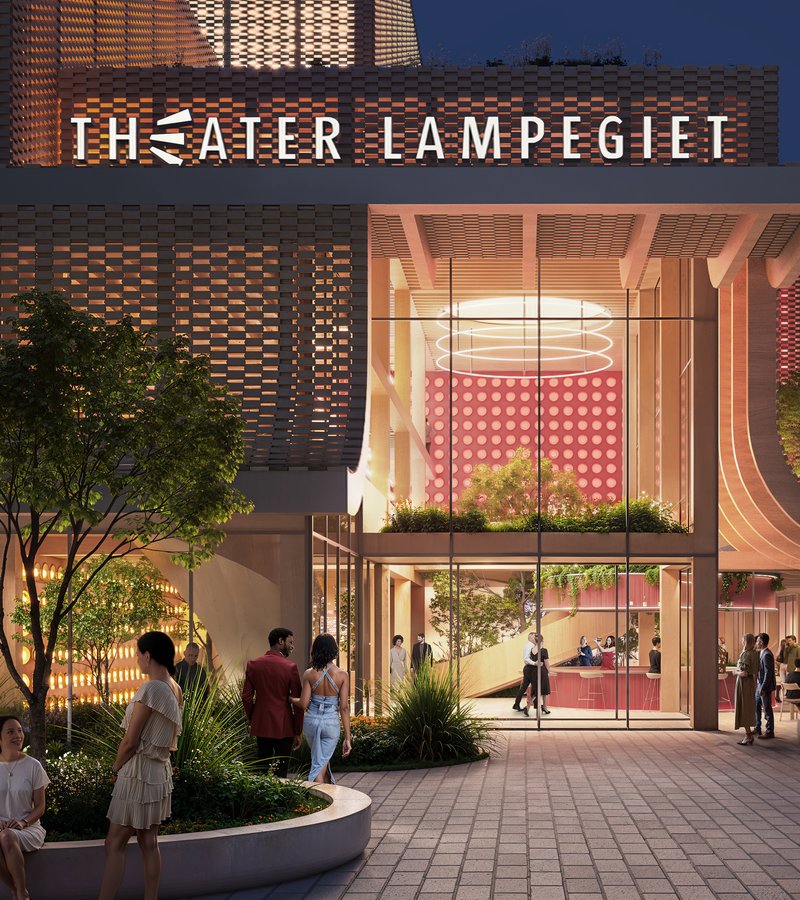
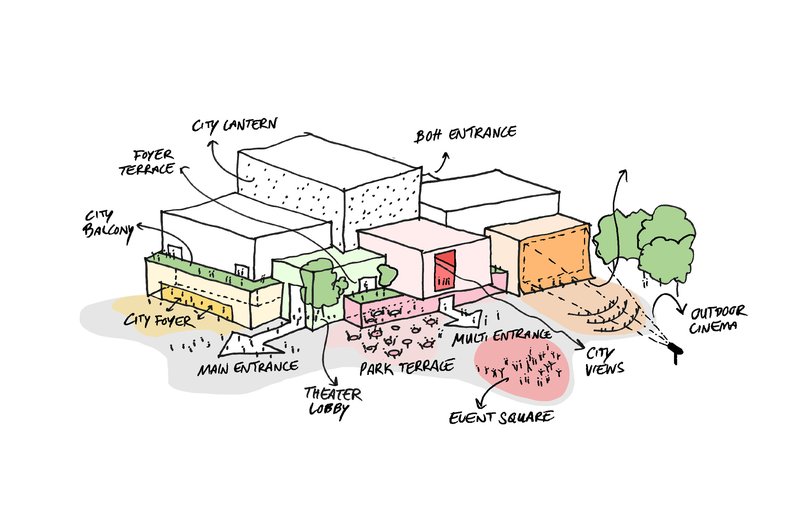
The theatre's strategic location serves as more than just a place for artistic expression. It is the first phase of a grand urban redevelopment, a plan that envisions a vibrant city park, an events area, and residential buildings. The theatre's presence seamlessly connects Veenendaal's bustling streets with its serene future park, inviting passersby through its expansive, transparent foyer facades.
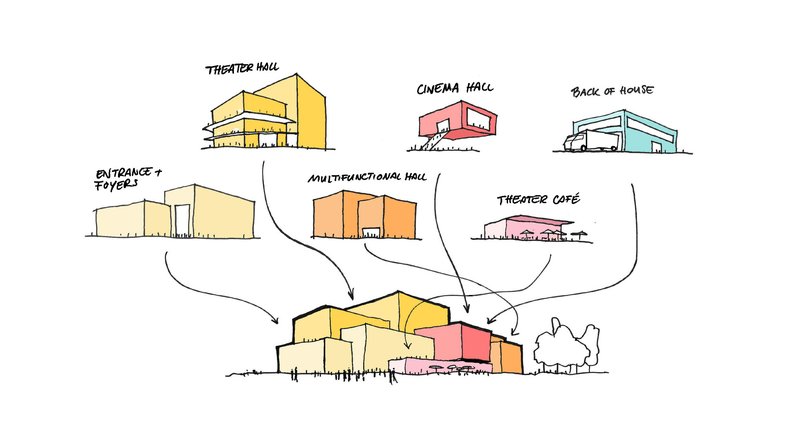
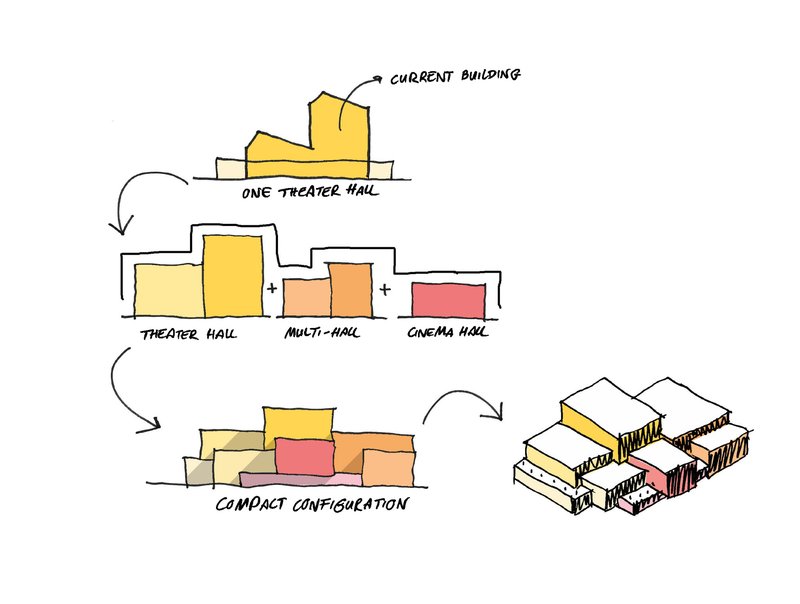
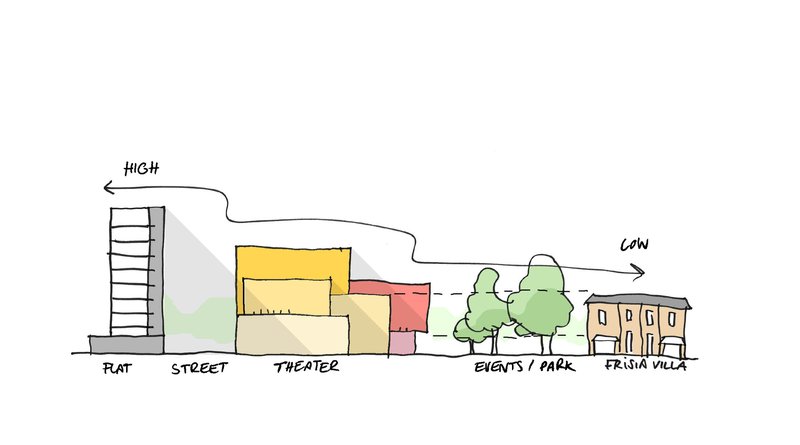
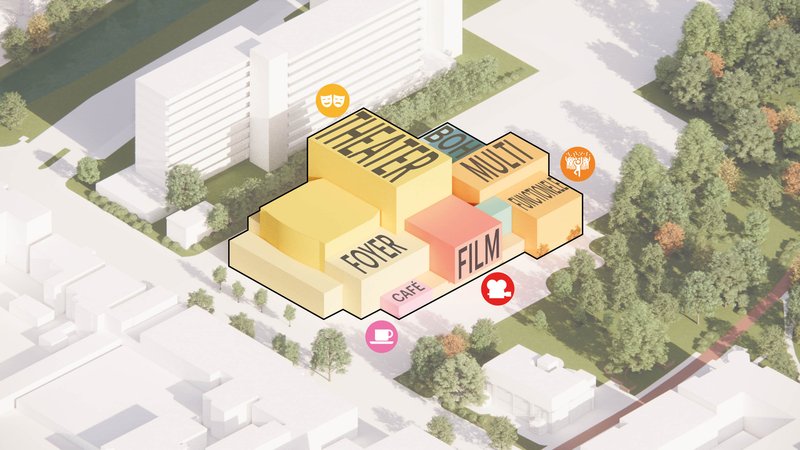
MVRDV's elegant proposal unfolds through six distinct volumes, each a testament to thoughtful planning and artistic expression. The structure houses three auditoriums, their capacities ranging from a grand 700-seat space to a more intimate 100-seat auditorium dedicated to Filmhuis Veenendaal. These auditoriums, alongside welcoming foyers, a café, and essential back-of-house areas, are intricately stacked, forming a cohesive yet visually engaging whole. This arrangement not only diminishes the perceived mass of the building but also harmonizes with the scale of its urban surroundings.
Visitors are welcomed into a three-story central foyer, a space that serves as the heart of public interaction. Here, a café extends an invitation to linger, its terrace offering an open embrace to the outdoors. A secondary foyer guides visitors to the adaptable auditorium, while the cinema on the first floor offers glimpses of the square below and the venerable Old Church in the distance.
The facade is a poetic blend of brick and expansive glazing, overlaid with ceramic screens that dance across the surface like theatrical curtains. These elements pay homage to Veenendaal's legacy of industrial textile production, infusing the building with a sense of place and history. As evening descends, the facade transforms, its perforated ceramics allowing light to escape, casting a soft, diffuse glow that beckons and enchants.
Sustainability is woven into the very fabric of the theatre's design, a collaboration with Buro Happold that ensures environmental responsibility. Photovoltaic panels, a heat pump system, and energy-efficient installations work harmoniously to reduce the building's carbon footprint. Verdant planters dot the landscape, while treasured trees, identified by the municipality, stand preserved. Measures to nurture local biodiversity, such as nesting boxes for birds and bats, further underscore the project's commitment to ecological stewardship.
The interior spaces are crafted with foresight, their flexibility ensuring adaptability to future needs, thus ensuring the theatre's relevance and utility for years to come. As the world of cultural architecture continues to expand, other projects also capture the imagination. Snøhetta's vision for the Düsseldorf Opera House, Renzo Piano's cultural center in Piraeus, and the forthcoming Las Vegas Museum of Art by Francis Kéré all contribute to this global dialogue of design and heritage.
In Veenendaal, the Lampegiet Theatre stands poised to become a symbol of enlightened architecture, where history and modernity converge in a luminous celebration of culture and community.