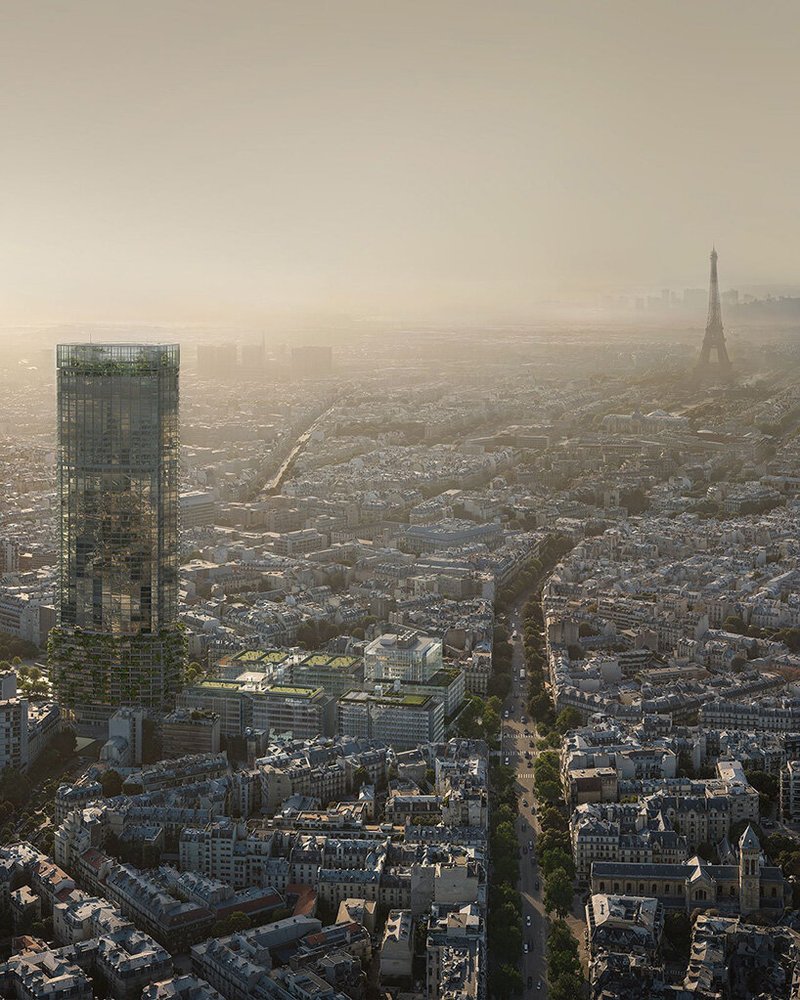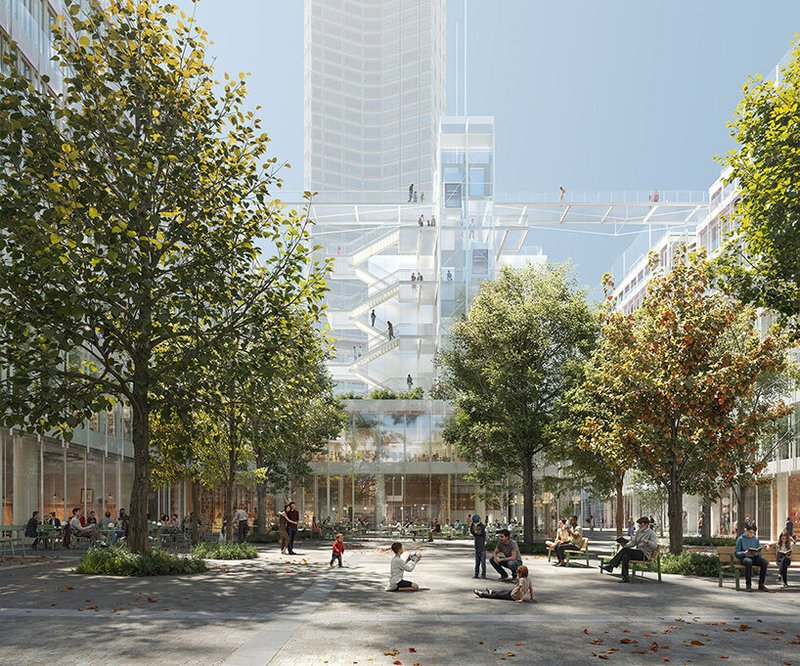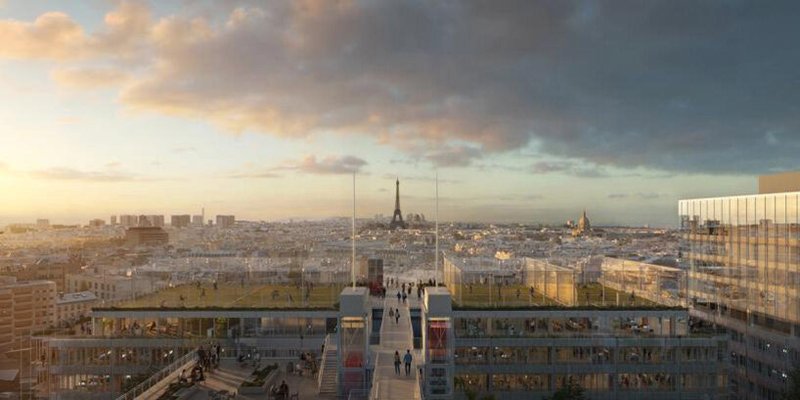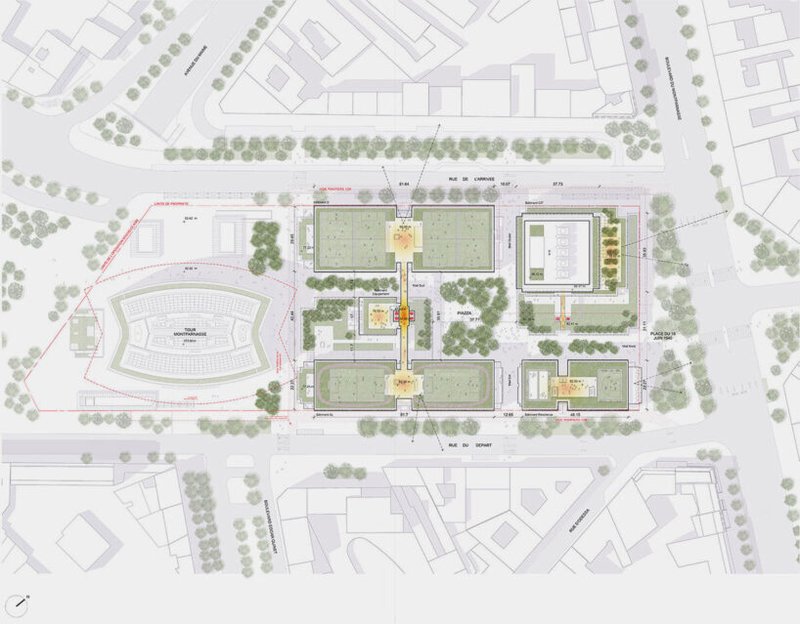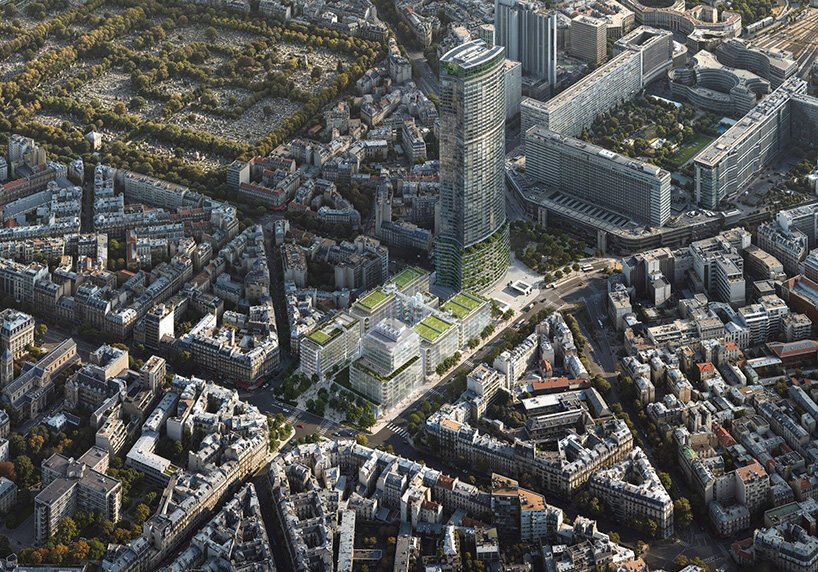
In the heart of Paris, a renaissance is underway, as the renowned Renzo Piano Building Workshop unveils its transformative vision for the Ensemble Immobilier Tour Maine-Montparnasse. This ambitious urban retrofit breathes new life into a once-closed 1970s retail complex, inviting the city back into its embrace. Commissioned by the co-owners of the Montparnasse Commercial Centre and the CIT Tower, this project unfolds alongside the ongoing rejuvenation of the adjacent Montparnasse Tower, guided by Nouvelle AOM. These dual interventions seek to recalibrate one of Paris's most contentious sites, evolving it from an introspective megastructure into a permeable urban district, deeply rooted in the rhythm of daily life and the vibrancy of public space. The architects' vision is to reopen this enclave to the city, creating new pedestrian thoroughfares that weave through the block, linking Rue de Rennes with the Montparnasse station and neighboring streets across three distinguished Parisian arrondissements. The ground floors, once opaque, now unfold as transparent and inviting corridors, offering visual and physical continuity throughout the site. At the heart of this reimagined landscape lies a lushly planted piazza, a protected civic space designed to be a sanctuary from the relentless hum of traffic. Here, everyday activities take precedence over monumental gestures. Cafés and terraces spill out into the open, while cultural programs and sports facilities animate the square, transforming it into a communal living room for the neighborhood. Originally crafted by AOM and constructed between 1969 and 1973, the Ensemble Immobilier Tour Maine-Montparnasse arose from the site of the former Montparnasse train station. Comprising the tower, the commercial center, and the CIT Tower above, it epitomized an era of slab-based urban planning, characterized by separation, elevation, and internal circulation. Over time, these strategies fostered a fragmented condition, severing connections with the surrounding communities. RPBW's proposal addresses this legacy head-on, reimagining the commercial center as a contemporary Parisian block that reconnects streets, restores ground-level continuity, and reintroduces public life where it had once receded. New structures are thoughtfully scaled to harmonize with the surrounding urban fabric, reinforcing the perception of a coherent block rather than a sprawling megastructure. The architects introduce a vibrant mix of cultural, residential, commercial, and sports uses, including student housing, offices, and local retail. This eclectic blend nurtures a proximity-based lifestyle, extending activity beyond traditional retail hours and cultivating a more inclusive, walkable environment. In this context, architecture transcends mere form, emerging as a framework for encounter, movement, and coexistence, aligned with broader shifts in how Paris approaches large-scale inner-city transformations. The intervention retains the existing structural grid as its backbone, championing sustainability by reducing material consumption and embodied carbon, with reuse as a central design ethos. Where new volumes emerge, they do so as lightweight timber structures, seamlessly integrating additional programs with minimal structural alteration. Through conservation, transformation, and selective demolition, the project treats the inherited fabric as a valuable resource. Commissioned in 2022, the project experienced a brief pause in 2023 as amendments to Paris’s Land Use Plan were deliberated. Design work resumed in 2025, with discussions harmonizing planning, environmental, and client objectives into a singular vision for both the commercial center and the CIT Tower. By late 2025, the Council of Paris voted in favor of the project in a bipartisan decision, culminating in the signing of a protocol agreement between the City of Paris and the EITMM in January 2026. With the Montparnasse Tower's redevelopment as its parallel, this project stands poised to redefine urban living, welcoming the city back into its folds with grace and inclusivity.